Glider designs, messages in Morse code and testing for acids and alkalis taught the students interesting lessons about ‘Connections’, the theme of this year’s event.
Through the week the students learned about the forces of flight, building gliders with paper, straws and skewers, and exhibiting strong lift and little drag.
They created electrical circuits to enable them to send messages in Morse code, matching the circuit symbols for bulbs, switches, batteries and the ammeter.
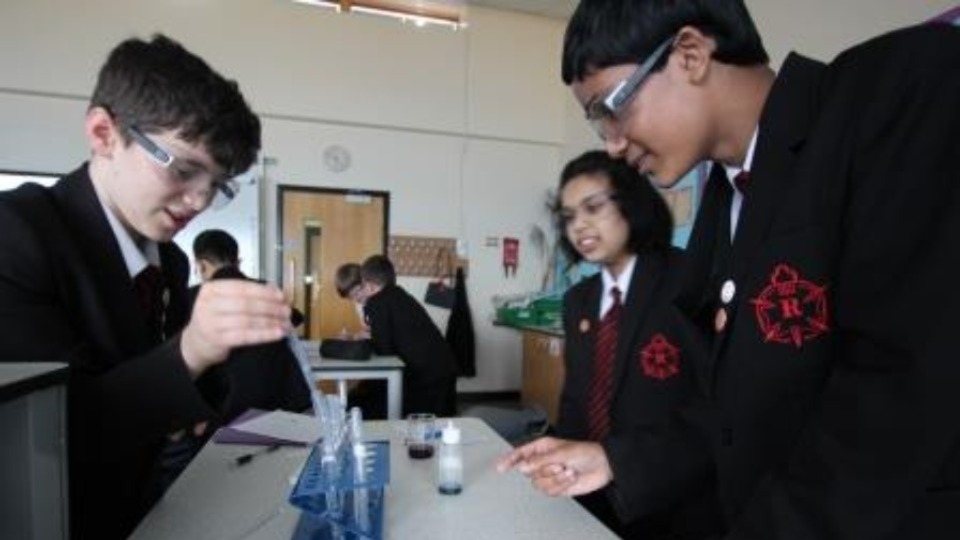
Finally students used red cabbage to create an indicator to test a range of household substances - were they acidic, alkaline, or neutral?
A final challenge for students during the week and beyond was to combine their science interest with artistic flair, and create their own posters to promote science.
The winning students will be travelling later in the year to Manchester Metropolitan University. In one of the university laboratories they will discover how to make aspirin.
The students also learnt about the huge choice of amazing careers available in science - from marine biologist to toxicologist, astronomer to pharmacist.
Radclyffe's Head of Science Andy Watson said: “Promoting a love of, and involvement in science is the aim of British Science Week, and we’re delighted to inspire our young people about what they can achieve.”
British Science Week celebrates the achievements and potential of science, technology, engineering and maths, and is organised by the British Science Association.