
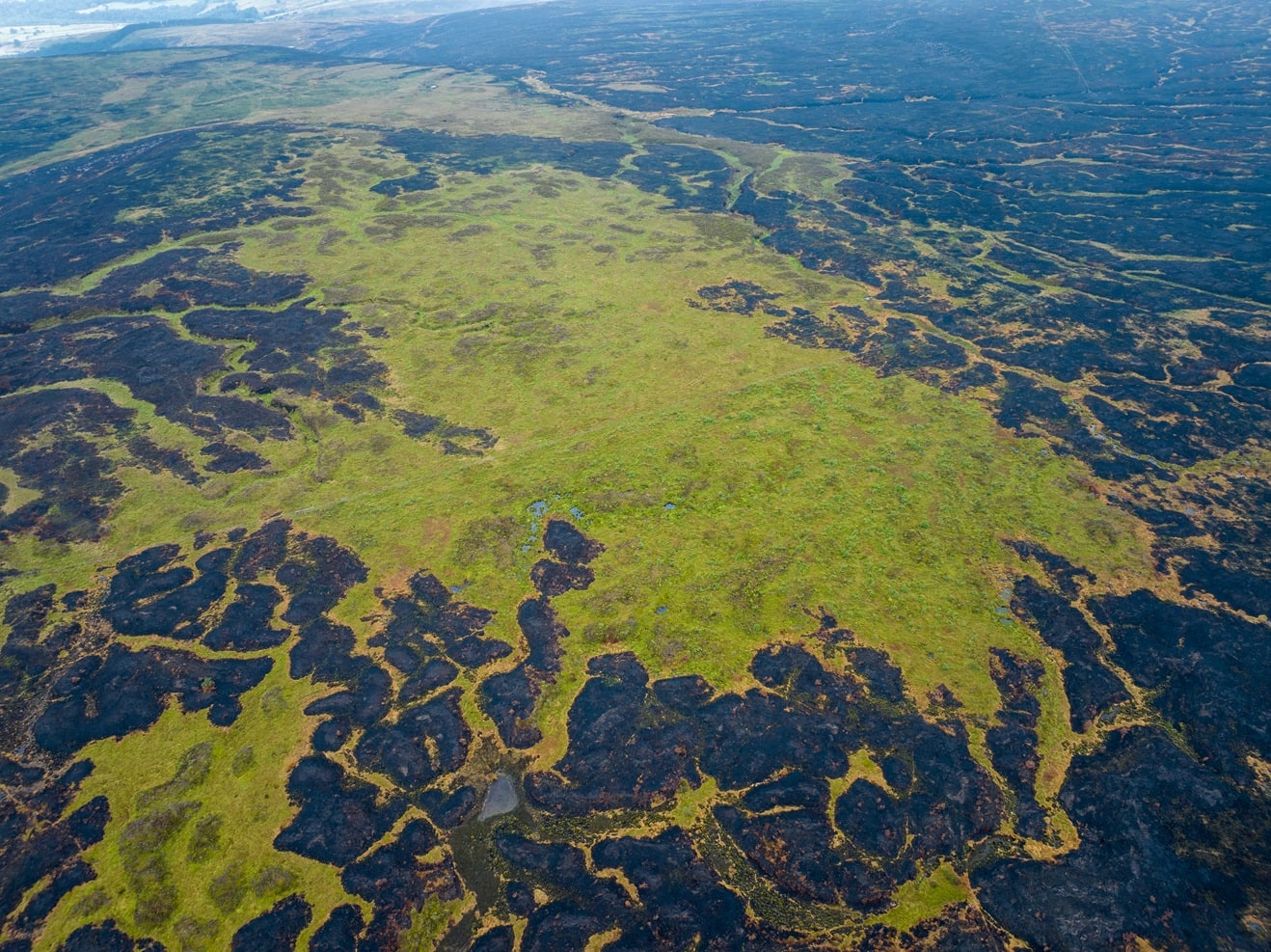
The RSPB said early analysis indicates differences in burn severity between areas where peatland restoration has taken place and those where work has not yet been carried out.
Between 800 and 1,000 hectares of habitat are estimated to have been destroyed by the fires, which led to a major incident being declared.
The images show large areas of burnt moorland alongside greener and wetter patches where restoration measures have been introduced.
The RSPB and United Utilities began working together at Dove Stone in 2010 to restore peatland which had suffered degradation since the industrial revolution.
Work initially involved bringing vegetation back to areas of bare peat. More recent measures include installing stone dams in gullies and peat dams, as well as planting Sphagnum moss to retain water.
According to the RSPB, more vegetation appears to have survived the fires in some of the areas where this work has taken place.
Martin Randall, RSPB operations manager for Central and Eastern England, said: “These images are incredibly powerful because they show that even in a landscape that has experienced significant damage, there are signs of hope.
“While it's too early to understand the full long-term impacts of the wildfire, you can clearly see areas where restoration measures such as peat dams have been put in place and where more vegetation appears to have survived the fire.
“Dove Stone is still on a long journey of recovery, but these early findings are encouraging and reinforce why restoring peatlands is so important for wildlife, climate and helping landscapes become more resilient to extreme weather.”
Dove Stone provides habitat for bird species including Curlew, Dunlin and Golden Plover.
The drone images will be used to monitor how different parts of the landscape recover following the fires.
Ed Lawrance, catchment partnership officer for United Utilities, said: “While it is very difficult to witness fires of this scale, seeing this evidence of resilience and the early green shoots of recovery is very encouraging. Restoration is a long-term process and work will continue.”
Dove Stone has now reopened to visitors.
The RSPB is asking people visiting the countryside to avoid campfires, barbecues and fireworks, take litter home and report fires quickly.
Mr Randall added: “This year has shown just how vulnerable our upland landscapes can be to wildfire. While climate change is creating the conditions for more frequent and severe wildfires, it is important to remember that almost all wildfires in the UK are caused by human activity.”