The discovery could potentially accelerate early diagnosis, speed up drug discovery and lead to advancements in personalised medicines.
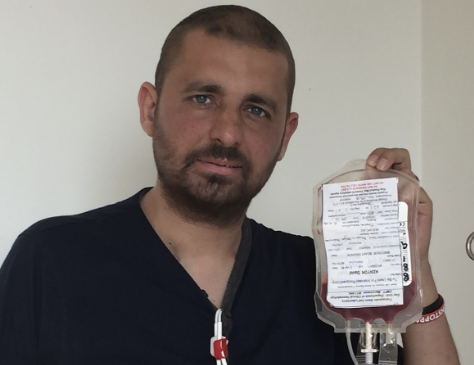
The Cancer Research UK-funded study, which has been published in the journal Advanced Materials, saw scientists from The University of Manchester collect blood samples from women with advanced ovarian cancer who were treated with a type of chemotherapy called CAELYX®.
This chemotherapy drug is contained in a soft, lipid-based nanoparticle, called a liposome, which acts as a vessel to help minimise side effects.
Women gave a sample of blood, following an injection of CAELYX® over a course of 90 minutes as part of their treatment. By extracting the injected liposomes, the scientists were able to detect a wide variety of biomolecules that stuck to the surface of the liposome - called the ‘biomolecule corona’.
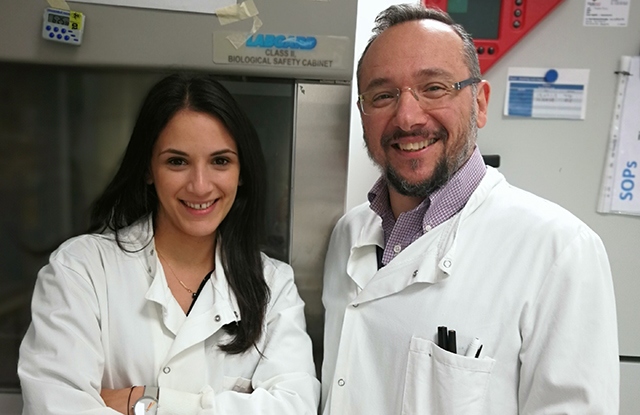
Professor Kostas Kostarelos, lead author from The University of Manchester, said: “We’re astonished at how rich the information was on the surface of the liposomes taken from the blood.
“We hope this technique could be a springboard for further research, from monitoring disease progression or recurrence, to identifying which treatment is best for each patient and potentially finding new biomarkers for early diagnosis.”
This is a step forward in developing a better technique to gather information from patients’ blood - a ‘halo effect’ of biomolecules sticking to the liposomes has been seen before, but only after dipping the nanoparticles in blood samples in a tube outside the patient’s body.
The researchers now hope to use this technique in mice to help find the best patterns of biomarkers to identify cancers in the early stages of disease as part of their Cancer Research UK Pioneer Award, which funds innovative ideas from any discipline that could revolutionise our understanding of cancer.